What Peru’s PCN Populations Reveal About Protecting U.S. Potatoes
The genetic diversity of potato cyst nematodes (PCN; Globodera spp.) varies significantly by geography. Understanding this diversity is critical to inform the development of resistance sources that will remain durable over time, and to help define the quarantine risk posed by the introduction of non-native populations into U.S. production regions.
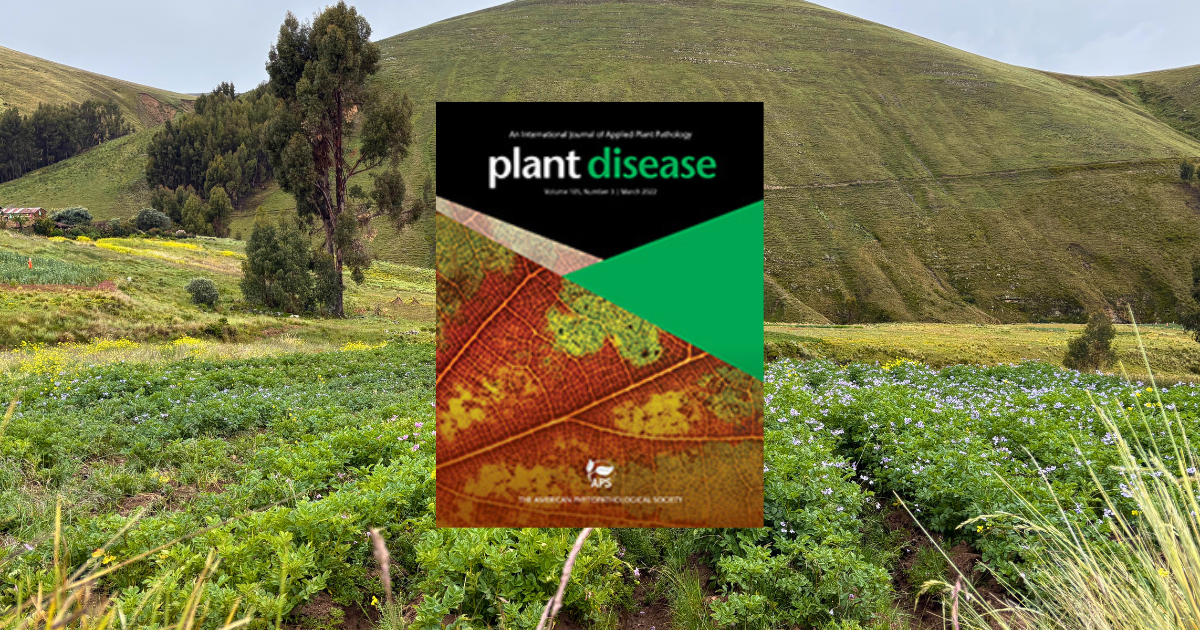
A new study from the PAPAS project and the University of Idaho PCN research team published in Plant Disease, “Virulence Diversity of Peruvian and United States Potato Cyst Nematode Populations Across a Panel of Potato Resistance Sources,” sheds new light on Peru’s PCN populations.
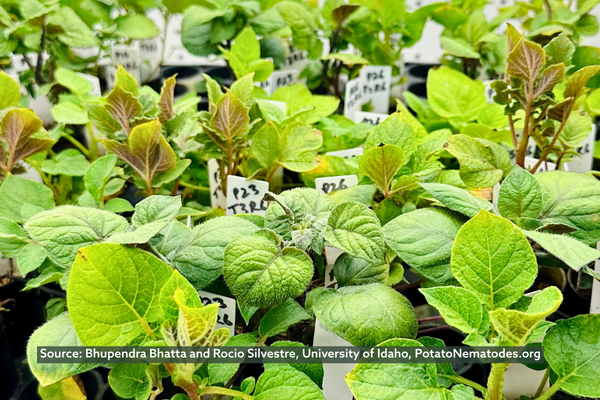
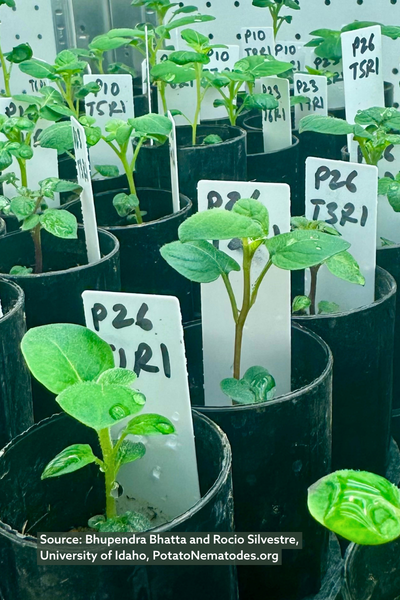
Researchers evaluated the virulence of 10 Peruvian Globodera populations and compared them to two U.S. populations — pale cyst nematode (G. pallida) Pa2/3 from Idaho and golden cyst nematode (G. rostochiensis) Ro1 from New York — across potato genotypes that included standard differential lines, breeding clones, and commercial varieties.
The team assessed whether Peruvian PCN populations could reproduce on host potato material, and how their virulence profiles compared to what U.S. breeders and resistance programs currently work with.
Key Findings
Peruvian PCN populations are significantly more diverse and virulent than U.S. populations.
While the U.S. PCN populations displayed expected virulence profiles consistent with what has been established through decades of monitoring, the Peruvian PCN populations exhibited high diversity and complex virulence phenotypes that differed substantially from their North American counterparts.
Identification of an Andean population with a unique virulence profile.
An Andean G. pallida population designated PER10 partially overcame Pa2/3 resistance in the variety ‘Maria Huanca,’ but was avirulent to H2 resistance in the standard breeding clone P55/7, which is typically susceptible to U.S. G. pallida. The Peruvian population PER22 was virulent on the H3 breeding clone 12674ab1, achieving significantly higher reproduction than the U.S. G. pallida population. This finding is particularly relevant for breeding programs that rely on partial resistance sources as components of their management strategy.
Existing H1 resistance remained effective against Andean G. rostochiensis.
The H1 gene in clone NY121, which confers resistance to G. rostochiensis Ro1 in the U.S., remained effective against the Andean G. rostochiensis population. This is an encouraging finding that suggests some existing resistance sources retain their value against Andean lineages of this species.
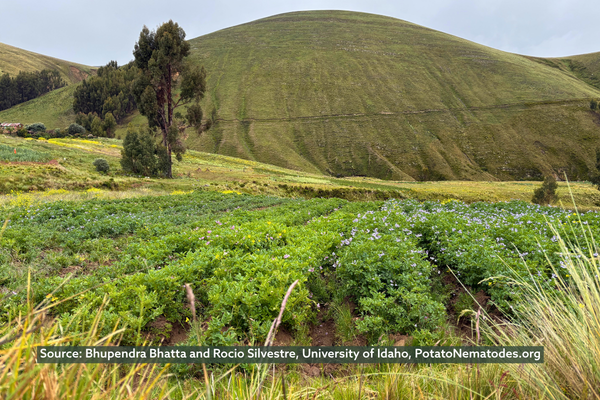
These findings quantify a significant virulence gap between the U.S. and Peruvian Globodera populations. The virulence diversity documented in Peruvian populations represents a significant step up in complexity compared to what U.S. resistance programs are currently designed to manage. An introduction event involving a highly virulent Andean lineage could compromise resistance sources that have been effective in the U.S. for decades.
Understanding the full spectrum of virulence that resistance must overcome is essential groundwork for building resistance that will be durable not just against current U.S. PCN populations, but against the broader range of Globodera diversity that exists in the pest’s native Andean range.
The paper, “Virulence Diversity of Peruvian and United States Potato Cyst Nematode Populations Across a Panel of Potato Resistance Sources,” is now available in Plant Disease, the peer-reviewed journal of the American Phytopathological Society.
Read the abstract and access the paper here.
Authors: Bhupendra Bhatta1, Inga Zasada2, Joseph Kuhl3, Javier Franco Ponce4, Rocio Silvestre5, and Louise-Marie Dandurand6
1Graduate Research Assistant, University of Idaho
2Plant Pathologist, NemaSolutions
3Associate Professor, University of Idaho
4Nematologist and Agricultural Engineer, Peru
5Postdoctoral Fellow, University of Idaho
6Professor of Plant Pathology, University of Idaho