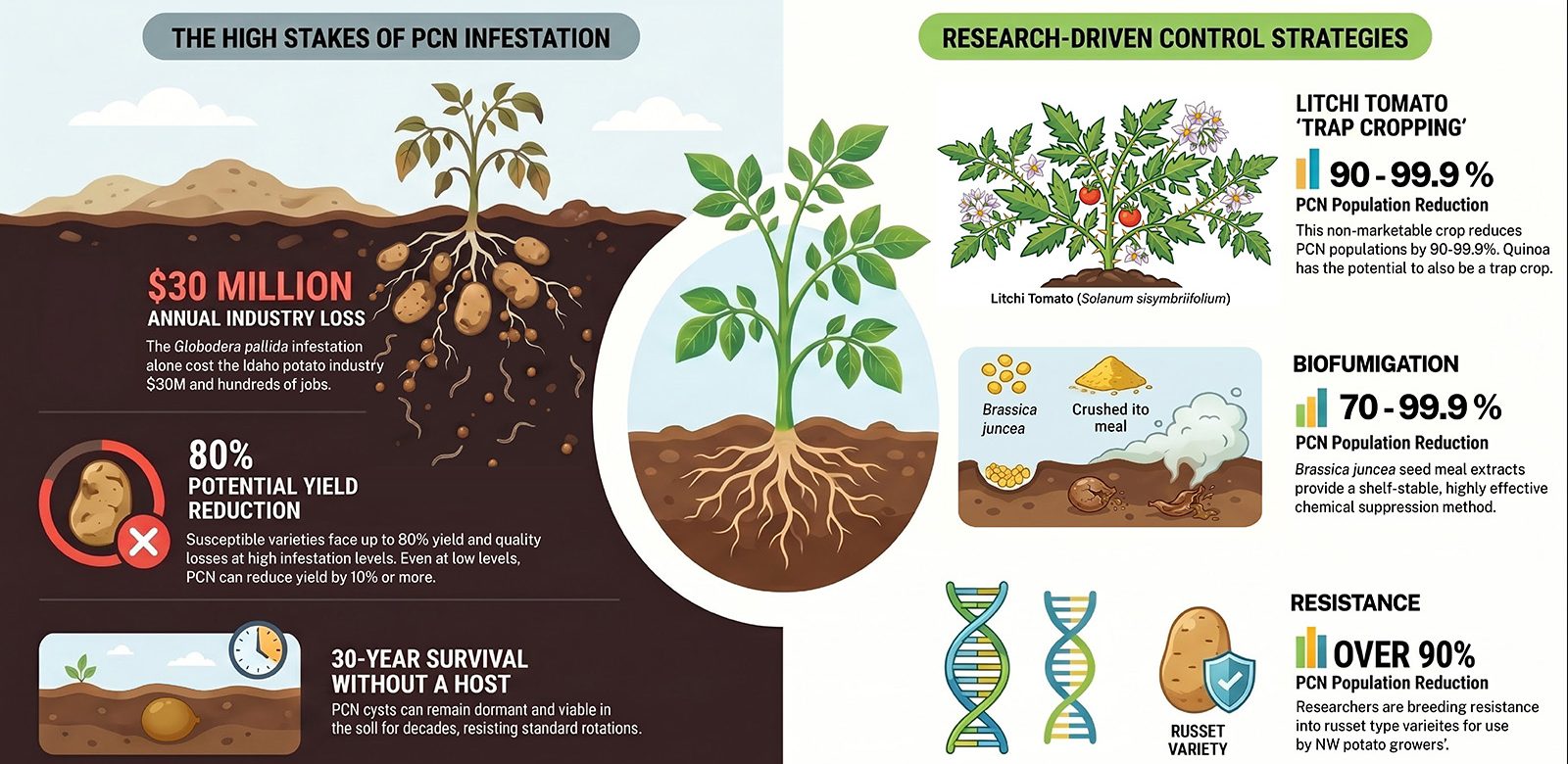
Potato Cyst Nematodes: Foundational Research Driving Solutions (Potato Progress)
A recent article by PAPAS researchers summarizes 20 years of potato cyst nematode research through the University of Idaho Potato Cyst Nematode (PCN) research program.
When the pale cyst nematode (Globodera pallida) was first detected in Idaho in 2006, it set off a coordinated response from USDA-APHIS, the Idaho State Department of Agriculture, the Idaho Potato Commission, and potato industry experts and researchers.
For the last two decades, the University of Idaho has led research and outreach efforts on developing practical strategies that support the regulatory goal to contain and eradicate the pale cyst nematode.
Louise-Marie Dandurand, Ph.D., Paige Hickman, Ph.D., and Lindsay Schulz have published a comprehensive overview of the UI PCN research program in Potato Progress, a journal of the Northwest Potato Research Consortium.
From economic impact modeling to progress in developing new solutions, this article covers the full scope of what these researchers have learned — and what it means for the future of nematode management in U.S. potato production.
Read the full Potato Progress article, Potato Cyst Nematodes: Foundational Research Driving Solutions for Potato Nematodes, to learn about:
- How PCN moves, reproduces, and causes damage
- Development of measures to improve PCN detection and predict its impact
- Progress in developing new PCN control strategies
- New areas of research in PCN and other nematode species
- Impact of PCN on a state, regional, and global scale
The foundational research developed in the UI PCN program has extended well beyond potato cyst nematodes. The tools, methods, and findings developed through this research are informing management strategies for root-knot nematodes and other species.
The full article is available at nwpotatoresearch.com..