Soil Sampling for Nematodes in Potato: New Video Series with Washington Grower
Our new nematode sampling video series featuring covers practical guidance for a successful nematodesampling program, including what drives decisions on sample location, quantity, timing, and depth.
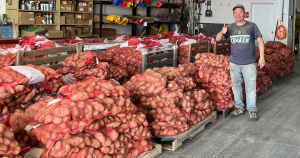
“I grow processed potatoes for the French fry market,” says Reynolds, who has farmed potatoes for more than 30 years in the North Columbia Basin. “Full season storage varieties give me great reason to be concerned about nematodes and the damage they can cause.”
Dr. Zasada is a nematologist and co-director of the PAPAS project with 25 years of experience studying potato nematodes. “I’m interested in helping growers like Brett find new ways to manage nematodes in potatoes and sample their fields better.”
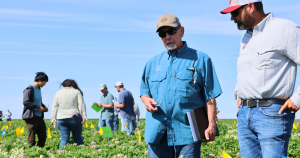
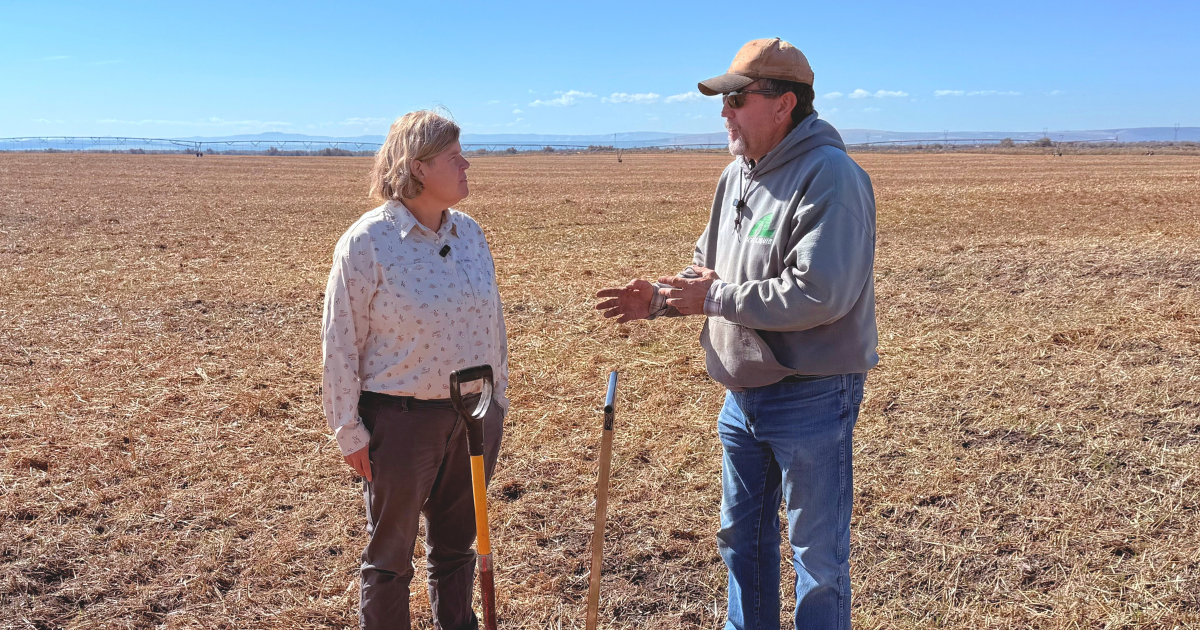
The series was filmed on a sunny day in September at one of Reynolds’ fields transitioning from wheat to potatoes — a window he uses to assess nematode populations before the next crop goes in. Reynolds explains why he samples carefully for multiple species. “Nematodes can be very damaging, so we look for ‘the big three’ species: root-knot nematodes, stubby root nematodes, and root lesion nematodes because of their role in the early die complex.”
Sampling Strategy: Timing, Location, and Depth
Reynolds discusses the timing decisions behind his four-year rotation sampling program: “We want to sample as close to the management decision being made as possible. We sample in the fall after a crop is harvested, when it’s warm and we have moisture, and when nematodes are up in that top two feet of soil where the roots are going to be. We’ll also do additional in-season sampling, particularly if we find hot samples in the fall.”
Dr. Zasada emphasizes the importance of reaching the root zone. “Nematodes are plant parasites, and a parasite needs roots to survive. Getting into that root zone is essential for an accurate sample.”
Reynolds also explains how field history and soil type shape his zone sampling approach. “We try to pull as many cores as we can. At the very least we break the field into quarters and sometimes smaller zones, depending on soil type and field history. Because nematodes are aquatic pests, we don’t focus only on higher ground or ridges — we make sure to get cores from the low areas of the field.”
He acknowledges that ideal timing isn’t always possible, but says any sampling is better than none. “Take grain corn for example: the water’s off, the soil’s dry, and you can’t get into the field before harvest. In that case, we’ll sample as soon as possible, even in spring — less ideal, but better than nothing.”
From the Lab Report to the Management Decision
The series also covers sample handling and how to interpret diagnostic lab results to inform management. Reynolds, who has years of experience reading nematode assay reports, says access to expertise has been essential. “I’m fortunate to work with people like Dr. Zasada, who help me understand what each nematode species is doing in the soil. I’ve also experienced potato infection firsthand and what it costs — and that fuels my curiosity to learn more about how we manage what we can’t see.”
He describes nematode management as an ongoing commitment rather than a one-time fix. “Fumigation is not eradication. We don’t get to go in once, eliminate the population, and be done. We have to manage nematodes through continued sampling, rotation management, and interpreting diagnostic reports. They’re a great road map, we just have to learn to navigate it.”
“If We Don’t Look, We Don’t Know”
Despite the challenges nematodes present to potato production, Reynolds is optimistic about the direction of nematode management science. “It is very difficult to manage what we don’t measure. If we don’t look, we don’t know. To manage nematodes effectively, we need to measure them through effective sampling. And from there, we can manage. And manage better.”
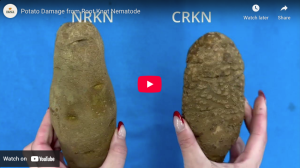
Watch the Series
The nematode sampling video series is available on PAPAS YouTube, Facebook, and LinkedIn channels. For additional soil sampling resources, read Build a Smarter Nematode Sampling Program for Better Management by Dr. Zasada.
About PAPAS
PAPAS (Potatoes & Pests — Actionable Science Against Nematodes) is a multistate transdisciplinary team of nematologists, plant pathologists, plant breeders, economists, computer scientists, and extension personnel from major potato producing states in the U.S. dedicated to solving the industry-wide challenges in managing potato nematodes. With feedback and support from potato industry leaders, PAPAS received a $6.8 million grant through the USDA National Institute of Food and Agriculture (NIFA) Specialty Crop Research Initiative for its project: Systems Approach to Controlling Nematodes in US Potato Production. By delivering data-driven tools, research, and new solutions for more effective, sustainable control of plant-parasitic nematodes, PAPAS is helping potato farmers protect yields and limit economic losses.