Sharing U.S. Potato Cyst Nematode Insights at World Potato Congress in Kenya
PAPAS Project Director Dr. Louise-Marie Dandurand takes the stage at the 13th World Potato Congress in Kenya to present “PAPAS: Addressing the Challenges of the Invasive Potato Cyst Nematodes in the United States” on Wednesday, October 28, 2026.
Dr. Dandurand’s presentation opens a concurrent session that continues with global perspectives from researchers at NEM-EMERGE (Netherlands), The James Hutton Institute (UK), International Institute of Tropical Agriculture (Nigeria), and International Centre of Insect Physiology and Ecology (Kenya). The session concludes with a panel discussion from presenters.
World Potato Congress: Potato Cyst Nematodes Concurrent Presentation
Wednesday, October 28, 2026
10:45 a.m.-12:30 p.m.
Chairperson: John Jones
Location: Cactus
PAPAS: Addressing the challenges of the invasive potato cyst nematodes in the United States
Presented by Louise-Marie Dandurand, Ph.D., Department of Entomology, Plant Pathology and Nematology, University of Idaho Moscow, PAPAS Project Director
The 2006 detection of Globodera pallida (the pale cyst nematode, PCN) in Idaho, and the Globodera rostochiensis (the golden nematode, GN) infestation in New York created long-term challenges requiring coordinated responses from USDA-APHIS, state partners (Idaho State Department of Agriculture and New York State Department of Agriculture and Markets), industry, and researchers. Over the past two decades, research and outreach efforts have focused on developing practical control tools, engaging growers, and providing outcomes that support containment and control of these regulated potato cyst nematodes. This presentation summarizes lessons learned from Idaho PCN and New York GN programs and the development of strategies to reduce risk while meeting regulatory requirements. This systems approach includes improved prediction of spread and risk, use of crop rotation, development of resistant potato varieties, and evaluation of biofumigation and nematicides. Results from these programs highlight the value of integrating regulatory agencies, industry, and research efforts to address complex nematode problems. Effective and durable potato cyst nematode control depends on combining strong science with practical field implementation and sustained collaboration with the potato industry.
About Dr. Louise-Marie Dandurand
Dr. Louise-Marie Dandurand is a professor at the University of Idaho, Moscow, ID. Dr. Dandurand is the director of the University of Idaho Pale Cyst Nematode project. Her position involves leadership and coordination of the program for research on, and eradication of, the pale cyst nematode (Globodera pallida), a quarantine pest of potato found in the U.S only in the state of Idaho. She is also the project director for the PAPAS Project (Potatoes and Pests: Actionable Science against nematodes; www.potatonematodes.org), a USDA-NIFA 5-year Coordinated Agricultural Project aimed at providing a systems approach to controlling potato nematodes. The goals of the PAPAS project include deployment of potato varieties resistant to potato cyst and root knot nematodes, development of decision support aids for farmers and regulators, improved molecular diagnostic tools for nematodes affecting potato, and identifying novel chemistries for nematicide development. Dr. Dandurand’s specific areas of research focus on: 1) development of decision support systems for improved management of nematodes; 2) use of trap crops and biofumigants to control potato cyst nematodes; 3) understanding genetic diversity of PCN and its implication in development of resistance; 4) developing potato varieties with broad spectrum resistance to PCN. Other responsibilities include support to the USDA-APHIS and ISDA eradication programs by conducting all bioassays for PCN cyst viability following nematicide treatments in quarantined fields for de-regulation of infested fields.
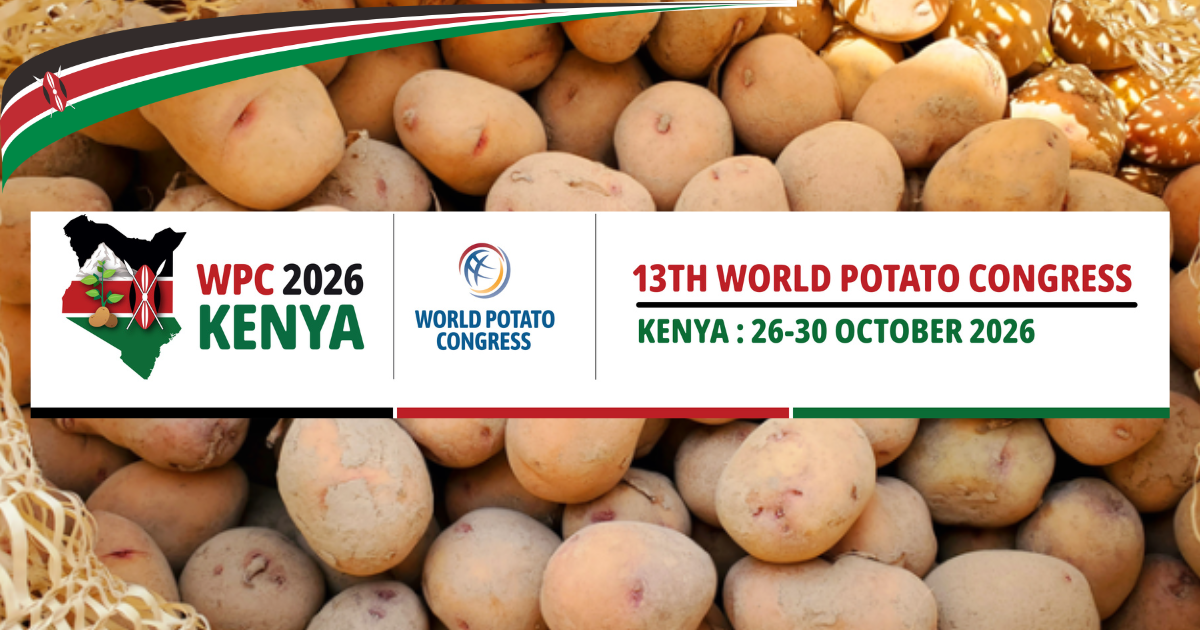
The World Potato Congress gathers potato industry leaders, researchers, and policymakers from around the world every four years. This year’s event runs October 26–30 in Kenya.