PAPAS Newsletter: Systems Approach Controlling Nematodes in US Potato Production
Read our newsletter to learn more about the PAPAS project goals, research team, and industry impact of potato nematodes.

Read our newsletter to learn more about the PAPAS project goals, research team, and industry impact of potato nematodes.
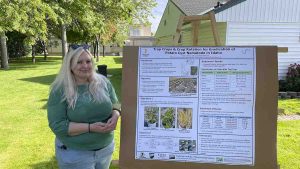
Planting quinoa could provide a profitable rotation crop for potato farmers in eastern Idaho who are dealing with an infestation of pale cyst nematode (PCN).
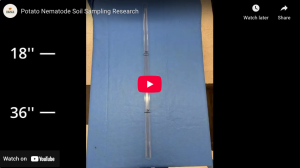
How deep do potato nematodes go in the soil and how much do they move? Hans Mejia shares how the PAPAS team is finding answers and solutions for these potato grower concerns.

Searle Farms owner-grower Bryan Searle, (Shelley, Idaho) recounts the challenges of pale cyst nematode detection in 2006.
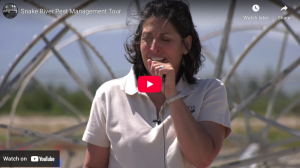
The 2017 Snake River Pest Management Tour provides an update on work to control and eradicate the pale cyst nematode in Idaho.
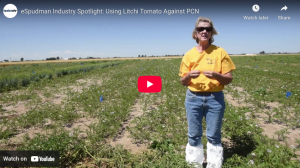
Researchers see promising results studying the efficacy of Solanum sisymbriifolium (litichi tomato or sticky nightshade) as a non-host trap crop to help eliminate pale cyst nematode in eastern Idaho.
Researchers at the University of Idaho College of Agricultural and Life Sciences are working to develop potatoes resistant to the pale cyst nematode.
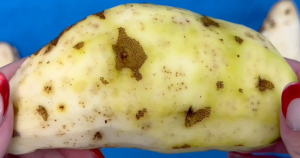
Widespread across cooler climates, northern root-knot nematode (Meloidogyne hapla) causes internal and external tuber damage that reduces potato quality.
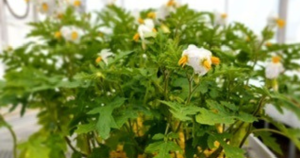
PAPAS is studying litchi tomato (Solanum sisymbriifolium) for the plant’s genetic immunity to several potato nematode species.

Targeted efforts in potato breeding programs can increase nematode resistance over time.