(Webinar)The Future of Potato Nematode Management: A Systems Approach
Watch our free webinar to see the latest discoveries in potato nematode control, detection, and resistant variety development.


Watch our free webinar to see the latest discoveries in potato nematode control, detection, and resistant variety development.
The PAPAS 2024 annual report showcases significant progress made in research for systems approach to potato nematode management.
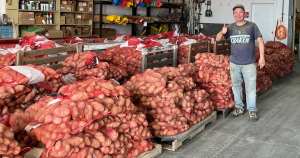
Advancing potato varieties with resistance to Columbia root-knot nematode (CRKN) through genomic prediction.

Developing a potato cultivar that is resistant to both Potato Virus Y (PVY) and potato cyst nematodes.

Research collecting potato pollen for developing varieties resistant to nematodes.

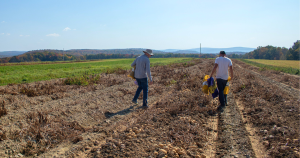
Thousands of different clones are grown and evaluated each year through potato breeding programs.
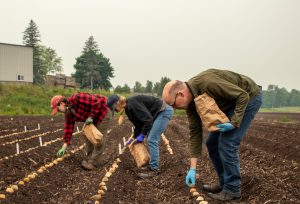
One of the environments the Cornell potato breeding program uses to test elite clones are muck fields in the northern part of New York.

Potato breeding programs use smaller tubers to grow potatoes in the field the following year.
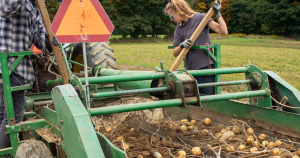
Similar to farmers picking out rocks from their fields over decades and still finding more, many potato fields have an endless supply of rocks.
A potato breeder never truly knows what they’ll get from a cross until the first harvest in the field.