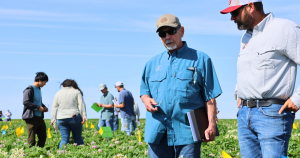
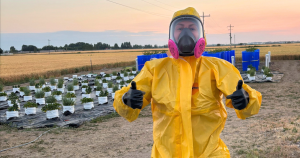
PAPAS Heads to the Field: Hermiston and WSU Potato Field Days This June
PAPAS researchers will be on the ground in Oregon and Washington, sharing the latest in nematode management research directly with growers, agronomists, and industry partners.
Potato growers rely on solid economic data when making nematode management decisions. Our team researches the financial impact of nematode management methods through predictive modeling and profitability estimates that reflect the majority of U.S. potato production systems.
PAPAS stands for Potatoes and Pests – Actionable Science Against Nematodes. Launched in 2023, the four-year project is funded by a $6.8 million grant from the USDA’s Specialty Crop Research Initiative and focuses on providing growers with best management practices for controlling nematode infestations.
February is National Potato Lovers Month! We’re working to protect one of the world’s most popular vegetables—and farmers’ bottom lines—from nematodes.
The PAPAS team will once again be presenting about nematode management at the annual Washington and Oregon Potato Conference, January 27-29, 2026, at the Three Rivers Convention Center, Tri-Cities, Washington.
The PAPAS 2025 Stakeholder Report summarizes major accomplishments across diagnostics, breeding, nematicide discovery, economics, decision tools, and outreach.
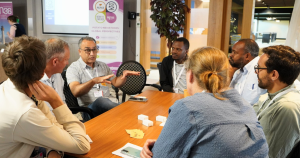
This panel discussion covers cornerstones of nematode management, presenting the latest information on economic thresholds, and providing an update on the development of nematode resistant potatoes.
This year at Potato Expo in Dallas, we’ll once again be in the Potato Research Advisory Committee booth #1132, where you’ll have a chance to test your nematode knowledge and win a prize.
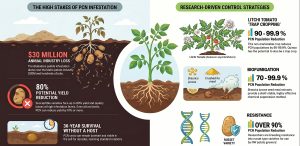
For decades, potato growers have fought nematodes with fumigation, crop rotation, and strict sanitation measures. While these practices remain essential, other management options need to be considered.
Three University of Idaho graduate students from the PAPAS team presented posters at the 2025 Washington State University Plant Science Symposium.