PAPAS Presenting at the APS Pacific Division Meeting
The PAPAS research team is headed to Pullman, Washington next week for the American Phytopathological Society (APS) Pacific Division Meeting at Washington State University, presenting our latest research on potato cyst nematodes.
Four oral presentations from PAPAS researchers will share new data on Globodera biology, diagnostics, crop rotation, and natural plant defenses — research that is directly relevant to potato growers, agronomists, and diagnosticians working in the Pacific Northwest and beyond.
Here’s what our team will be presenting:
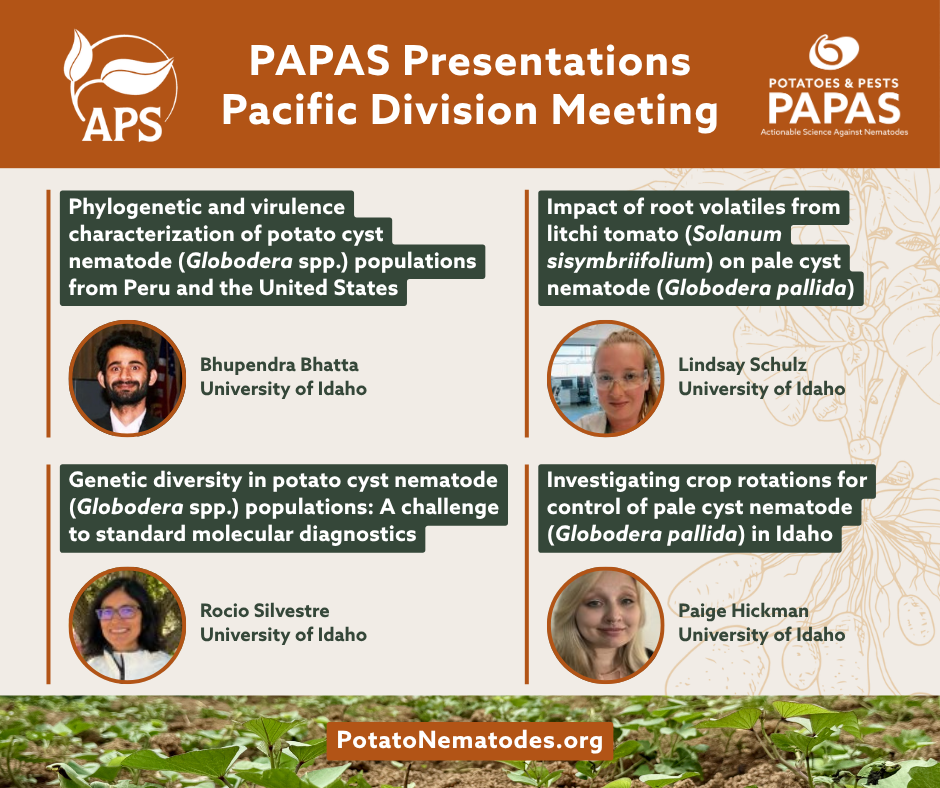
Phylogenetic and Virulence Characterization of Globodera Populations from Peru and the United States
Bhupendra Bhatta, University of Idaho
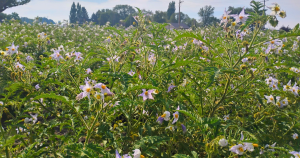
Impact of Root Volatiles from Solanum sisymbriifolium on Globodera pallida
Lindsay Schulz, University of Idaho
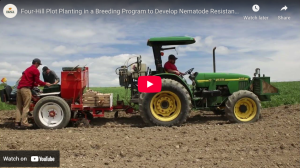
Investigating Crop Rotations for Control of Globodera pallida in Idaho
Paige Hickman, University of Idaho
Genetic Diversity in Globodera Populations: A Challenge to Standard Molecular Diagnostics
Rocio Silvestre, University of Idaho
These four presentations reflect the breadth and depth of PAPAS cyst nematode research — spanning molecular biology, plant-nematode interactions, field agronomy, and diagnostics. Together they represent meaningful progress toward the PAPAS goal of providing potato growers with better tools, better information, and better options for managing one of the most consequential pest threats in U.S. potato production.
We’ll be sharing updates and highlights from the meeting on our social media channels. Follow along and explore our website for the latest PAPAS research news and grower resources.
Learn more about this conference: apsnet.org/members/community/divisions/pac/meetings/Pages/2026.aspx.