First Idaho Field Cleared of Pale Cyst Nematode
For the first time since its discovery in 2006, the pale cyst nematode (Globodera pallida; PCN) has been successfully eradicated from a field in Idaho—thanks in part to the PAPAS team.

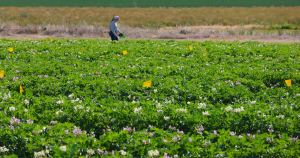
For the first time since its discovery in 2006, the pale cyst nematode (Globodera pallida; PCN) has been successfully eradicated from a field in Idaho—thanks in part to the PAPAS team.

Nematologists and plant pathologists gather to learn what’s new in potato nematode diagnostics.
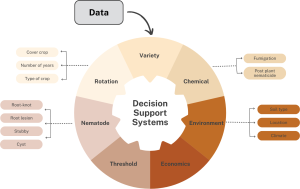
Providing potato growers with precise, data-driven strategies to effectively and sustainably combat plant-parasitic nematodes.

Watch our free webinar to see the latest discoveries in potato nematode control, detection, and resistant variety development.

The PAPAS 2024 annual report showcases significant progress made in research for systems approach to potato nematode management.
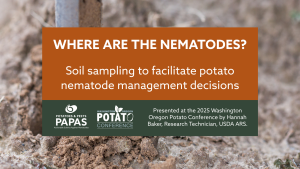
Learn more about why sampling for nematodes is important for potatoes; consideration for soil sampling (number of samples, depth, time of year); and research about potato nematode presence and sampling.
Learn about our research investigating litchi tomato for new nematode management chemistries.
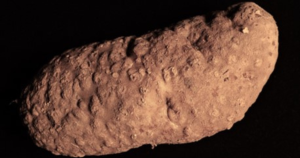
Found in the western US, Columbia root-knot nematode (Meloidogyne chitwoodi) infects potato roots and tubers, causing blemishes and defects that reduce quality.

See how extracts from litchi tomato (Solanum sisymbriifolium) are made afrom plant material for potato nematode research.
Read our newsletter to learn more about the PAPAS project goals, research team, and industry impact of potato nematodes.