2024 Potato Field Day Events
Find a Potato Field Day event near you and make plans to join us in addressing potato nematode management.


Find a Potato Field Day event near you and make plans to join us in addressing potato nematode management.
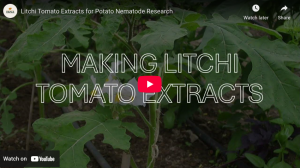
See how extracts from litchi tomato (Solanum sisymbriifolium) are made afrom plant material for potato nematode research.
Read our newsletter to learn more about the PAPAS project goals, research team, and industry impact of potato nematodes.
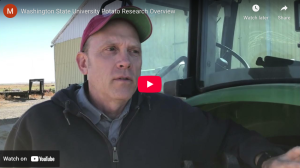
Introduction into Washington State University’s Potato Research Group: research projects, partnerships, and extension outreach.
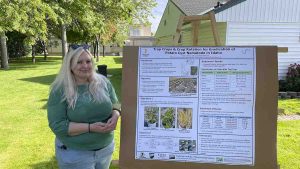
Planting quinoa could provide a profitable rotation crop for potato farmers in eastern Idaho who are dealing with an infestation of pale cyst nematode (PCN).
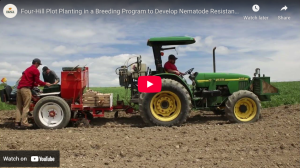
PAPAS and the Cornell Potato Breeding Program work towards developing cultivars that are compatible with growers’ production systems and resistant to nematodes.
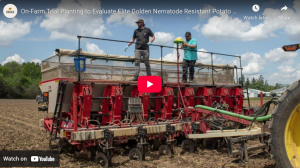
PAPAS and the Cornell Potato Breeding Program plant multiple elite breeding clones to evaluate nematode resistance.
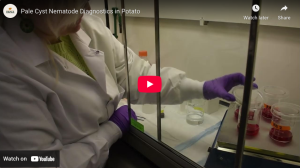
Research to help determine the impact of pale cyst nematode population densities on different potato varieties.
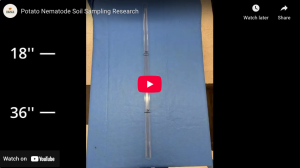
How deep do potato nematodes go in the soil and how much do they move? Hans Mejia shares how the PAPAS team is finding answers and solutions for these potato grower concerns.
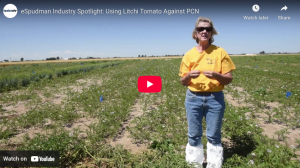
Researchers see promising results studying the efficacy of Solanum sisymbriifolium (litichi tomato or sticky nightshade) as a non-host trap crop to help eliminate pale cyst nematode in eastern Idaho.