PAPAS Newsletter: Breeding for Nematode Resistance in Commercial Potato Varieties
Learn more about one of the objectives of the PAPAS project: to develop cultivars resistant to several nematodes that attack potatoes.

Learn more about one of the objectives of the PAPAS project: to develop cultivars resistant to several nematodes that attack potatoes.

Find a Potato Field Day event near you and make plans to join us in addressing potato nematode management.
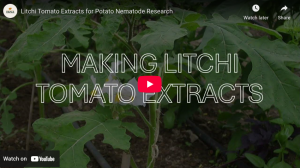
See how extracts from litchi tomato (Solanum sisymbriifolium) are made afrom plant material for potato nematode research.
Read our newsletter to learn more about the PAPAS project goals, research team, and industry impact of potato nematodes.

Introduction into Washington State University’s Potato Research Group: research projects, partnerships, and extension outreach.
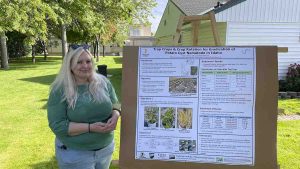
Planting quinoa could provide a profitable rotation crop for potato farmers in eastern Idaho who are dealing with an infestation of pale cyst nematode (PCN).
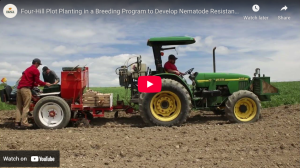
PAPAS and the Cornell Potato Breeding Program work towards developing cultivars that are compatible with growers’ production systems and resistant to nematodes.
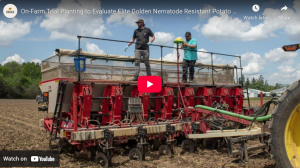
PAPAS and the Cornell Potato Breeding Program plant multiple elite breeding clones to evaluate nematode resistance.
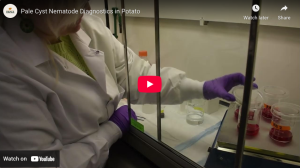
Research to help determine the impact of pale cyst nematode population densities on different potato varieties.
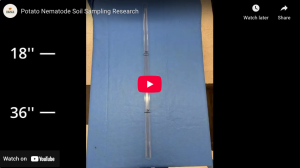
Sampling depth is an important factor in the likelihood of detecting nematodes through soil sampling. However, while the horizontal movement of nematodes in soil has been widely studied, research on their vertical movement is lacking.