PAPAS Newsletter: Novel Chemistries for Nematode Management
Learn about our research investigating litchi tomato for new nematode management chemistries.
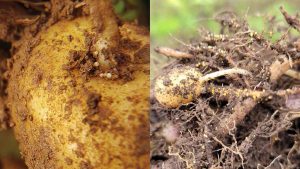
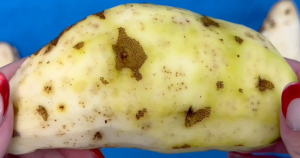
Found in the western US, Columbia root-knot nematode (Meloidogyne chitwoodi) infects potato roots and tubers, causing blemishes and defects that reduce quality.
Read our newsletter to learn more about the PAPAS project goals, research team, and industry impact of potato nematodes.
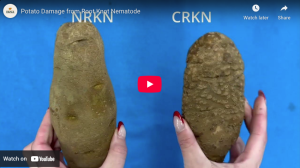
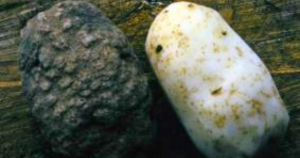
Damage to potatoes caused by northern root-knot and Columbia root-knot nematodes.
The researchers will target two species of potato cyst nematodes — the pale cyst nematode, which is known in the U.S. to exist only in a small area of eastern Idaho, and the golden nematode, found in New York.
Widespread across cooler climates, northern root-knot nematode (Meloidogyne hapla) causes internal and external tuber damage that reduces potato quality.
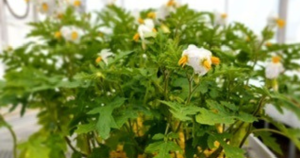
PAPAS is studying litchi tomato (Solanum sisymbriifolium) for the plant’s genetic immunity to several potato nematode species.
Research into breeding resistance to Columbia root-knot nematode into commercial potato varieties.
PAPAS is developing computational tools with Artificial Intelligence (AI) and machine learning (ML) to support potato nematode detection, mitigation, and management.
Developing molecular markers of Columbia root-knot nematode (M. Chitwoodi) aids in faster identification of the potato nematode races.